MSWAB Factsheets

Browse & Download a Factsheet

  • NYC Trash Export Fact Sheet infographic showing waste disposal data for various cities, including Niagara, Newark, and others, with a QR code at the top and a sign-up message at the bottom.

    NYC Waste Export Factsheet

    Learn about the locations that receive NYC’s waste refuse for burning or burial and how much it costs New Yorkers to export.

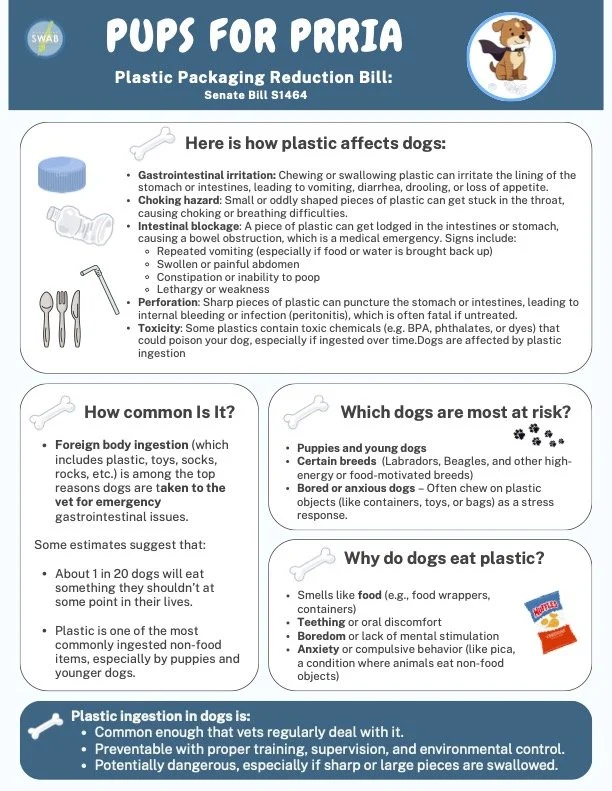
  • Pups for PRRIA

    Plastic waste is not only harmful to humans, it can be harmful to our furry friends too. Learn how the New York State Packaging Reduction and Recycling Infrastructure Act would keep our pups safe.

  • A flyer titled "What can we do about plastic?" highlighting the environmental impact of plastic, including statistics and facts about plastic waste, recycling challenges, and health risks. It features icons of a plastic bottle, bag, knife and fork, laundry, toothbrush, toothbrush, and a teddy bear.

    New York's role in the plastic problem

    New York's role in the plastic problem and what we can do about it

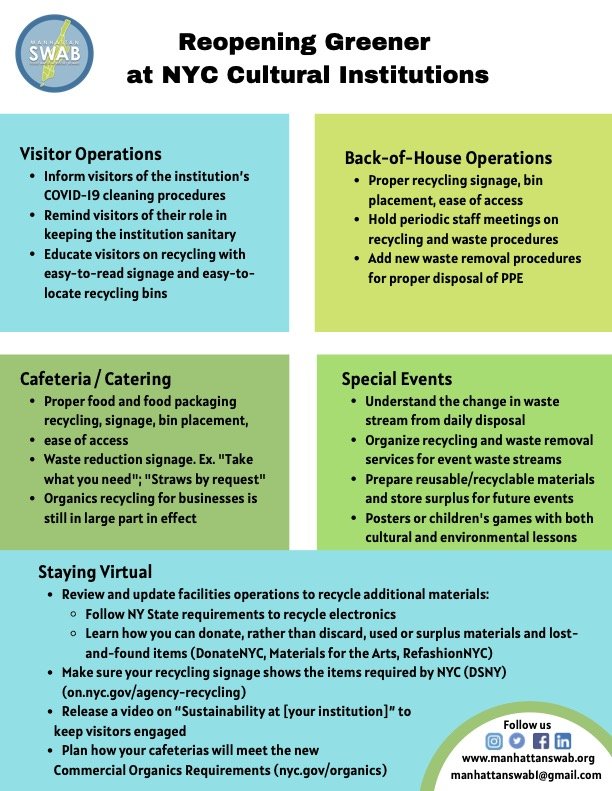
  • Informational poster titled 'Reopening Greener at NYC Cultural Institutions' divided into five sections: Visitor Operations, Back-of-House Operations, Cafeteria/Catering, Special Events, and Staying Virtual. Each section lists guidelines for sustainability practices including COVID-19 procedures, recycling, waste management, and virtual engagement.

    Reopening Greener at NYC Cultural Institutions

    This guide helps cultural institutions devise and attain sustainable waste management goals in the time of COVID-19.

  • Infographic about NYCHA recycling facts, showing that recycling rates are much lower, generation rates are higher, and contamination rates are higher compared to NYC averages, with bar graph comparing recycling contamination across different recycling types.

    NYCHA Recycling Fast Facts

    NYCHA

    See how the MSWAB is supporting NYCHA’s Inner City Green Team to improve recycling access and engagement in public housing complexes.

  • Flyer titled "Organics Recycling & NYC Health" discussing rethinking spent organic matter as a closed-loop system. Contains sections on why organics don't belong in landfills, benefits of excess food recycling, and a waste stream hierarchy. Features a small photo of composted organic waste.

    ORGANICS RECYCLING & NYC HEALTH

    Diverting organic matter from landfills is the simplest action to reach Zero Waste. This explains how.

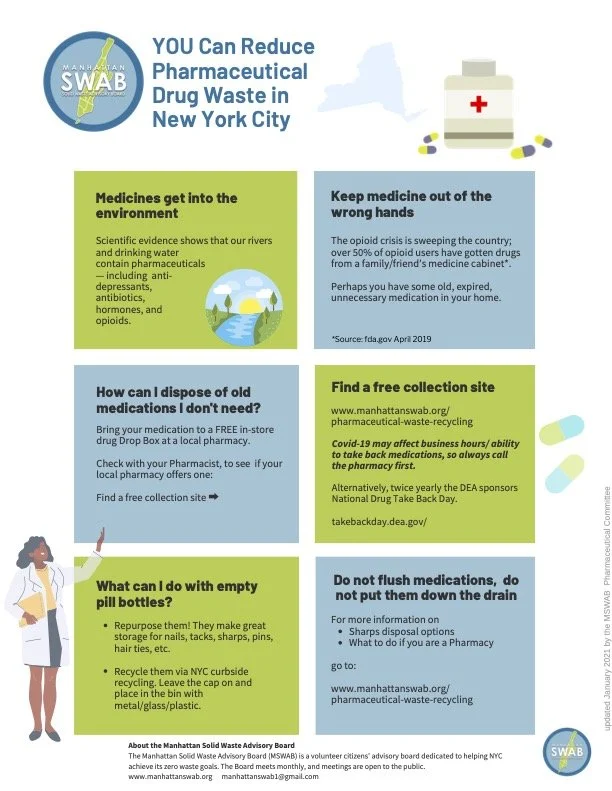
  • Infographic promoting proper disposal of unused medications and reducing pharmaceutical waste in New York City, with tips on medicine disposal, finding collection sites, and the dangers of improper medication handling.

    Reduce Pharmaceutical Drug Waste in NYC

    This one-page PDF provides instruction for reducing pharmaceutical waste in New York City

  • Infographic titled "Advancing Waste Reduction in Multi-Family Buildings" discussing NYC's zero waste goals, challenges of residential recycling, and solutions including community engagement and standard recycling practices, with images of New York City skyline and a pile of recycling and waste bins.

    ADVANCING WASTE REDUCTION IN MULTI-FAMILY BUILDINGS

    Learn how staff and residents of multi-family buildings in NYC can improve recycling and reduce organics waste.

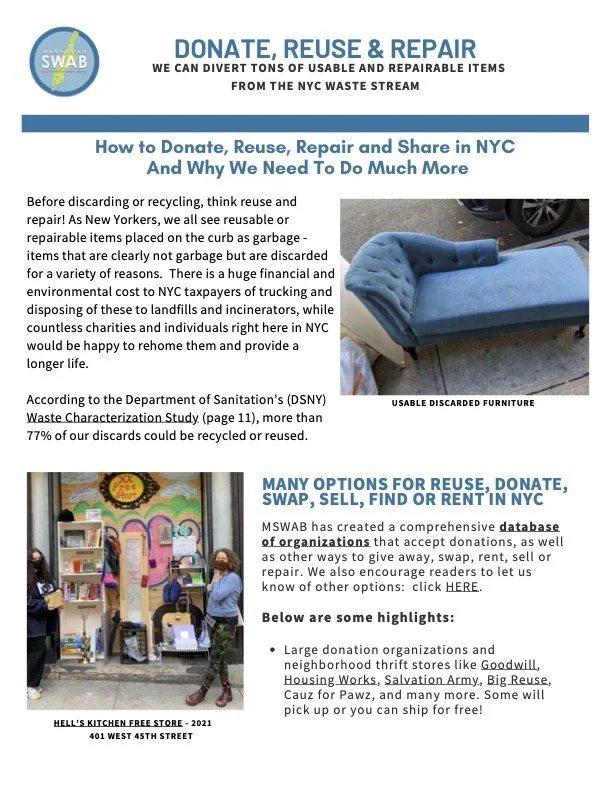
  • Flyer about waste reduction and donation options in NYC, featuring an image of discarded furniture and a store with people inside.

    donate, reuse & repair in NYC

    In an effort to reduce the large volume of reusable household items and furnishings thrown in the garbage and sent off to landfills, the MSWAB has compiled a list of organizations that will help you donate, share, sell, or swap the things you no longer want.

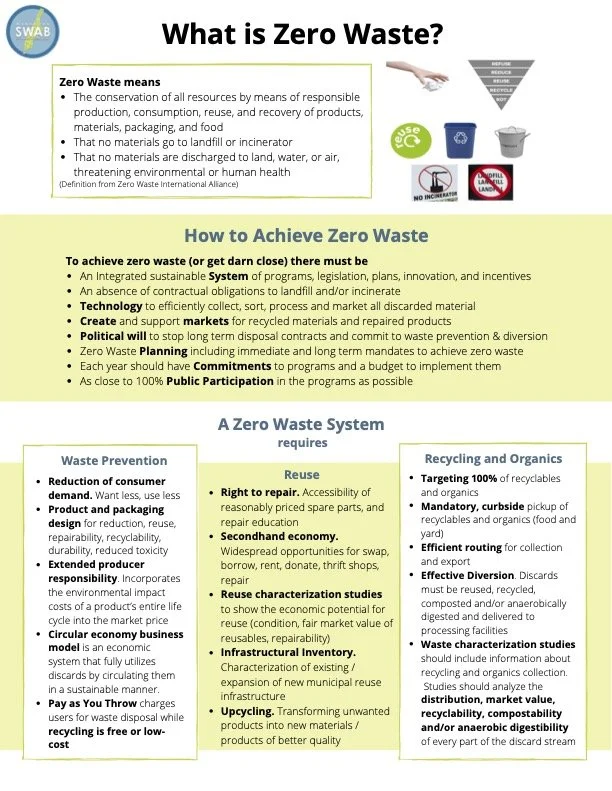
  • A detailed infographic explaining what zero waste is, how to achieve it, and the systems involved. It includes sections on zero waste meaning, ways to achieve zero waste, a zero waste system overview, waste prevention, reuse, and recycling. The image contains text, icons, and color-coded sections.

    what is zero waste?

    This factsheet explains Zero Waste and provides recommendations to help NYC get there.

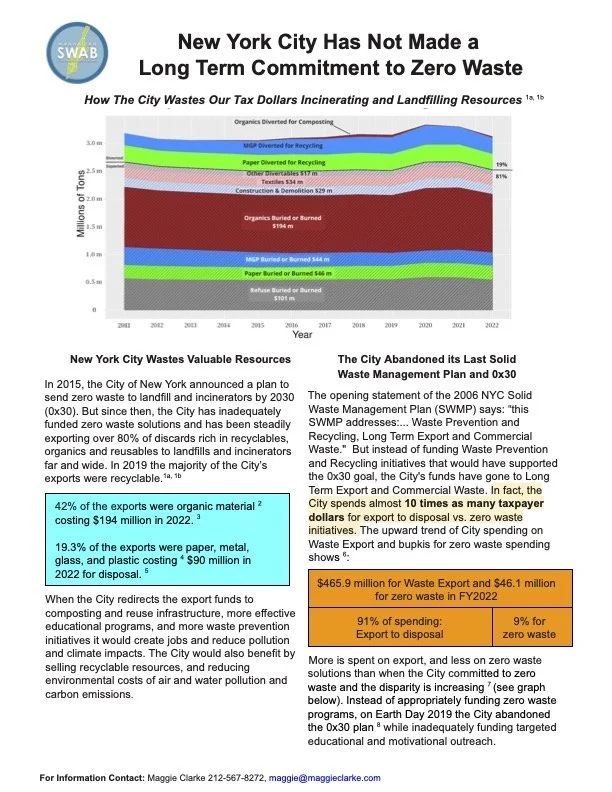
  • A graph showing New York City's waste management and recycling data from 2000 to 2022. It highlights the amount of waste diverted for recycling, burial, or burning, and includes statistics on exports, waste disposal, and financial costs. The image contains several colored sections and percentages related to waste diversion, with a focus on zero waste initiatives and export costs.

    new york city has not made a long term commitment to zero waste

    Learn how New York City is paying an ever-increasing amount to export the city’s waste.

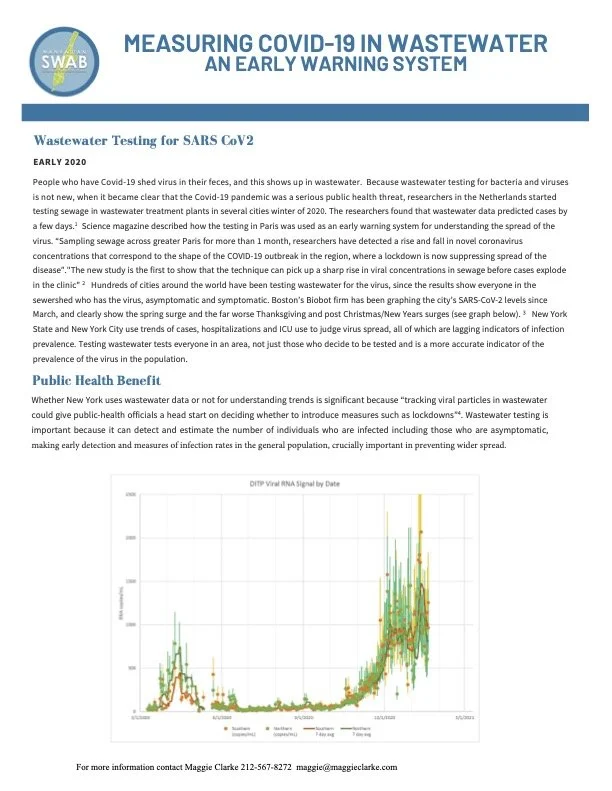
  • Document titled 'Measuring COVID-19 in Wastewater: An Early Warning System,' dated early 2020, explaining wastewater testing for SARS-CoV-2, including a graph of viral RNA signal trends.

    MEASURING COVID-19 IN WASTEWATER AN EARLY WARNING SYSTEM

    People who have Covid-19 shed virus in their feces, and this shows up in wastewater. Because wastewater testing for bacteria and viruses is not new, when it became clear that the Covid-19 pandemic was a serious public health threat, researchers in the Netherlands started testing sewage in wastewater treatment plants in several cities winter of 2020. The researchers found that wastewater data predicted cases by a few days.

  • A flyer discussing consumer demand's impact on climate change, including greenhouse gas emissions, sea level rise, and zero waste systems, with a graph and a photo of Manhattan flooded by rising sea levels.

    Consumer Demand And climate change

    Learn how getting to Zero Waste is one of the most effective steps we can take to reduce carbon emissions.

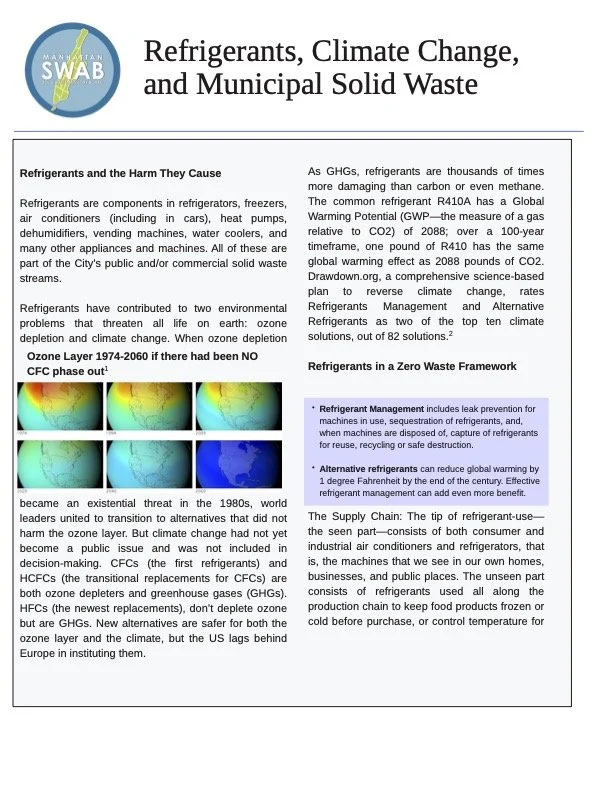
  • An informational poster about refrigerants, climate change, and municipal solid waste, featuring the Manhattan SWAB logo, with sections on the harm caused by refrigerants, the zero waste framework, and related graphics.

    Refrigerants, Climate Change, and Municipal Solid Waste

    Refrigerants and the Harm They Cause:

    Refrigerants are components in refrigerators, freezers, air conditioners (including in cars), heat pumps, dehumidifiers, vending machines, water coolers, and many other appliances and machines. All of these are part of the City’s public and/or commercial solid waste streams.

    Refrigerants in a Zero Waste Framework

Newsletter

Sign up to receive MSWAB news and updates.